
Yes, early contractions can absolutely feel like gas. That overlap is one reason early labor is so often second-guessed, especially when the sensation feels more crampy or bloated than dramatic. In our review of OB and maternity guidance, the distinction that mattered most was not the exact type of pain but whether it became rhythmic, progressive, and hard to ignore.
Why Your Body Sends Such Confusing Signals

A lot of people expect labor to feel obvious from the start. In reality, early contractions are often described as crampy, abdominal, or similar to indigestion. Bornbir's guide on gas pains vs contractions notes that many people describe early contractions as a dull ache that can wrap from the back to the front, and labor contractions often last 30 to 90 seconds.
That is why the first useful question is not “how bad does it hurt?” but “what is it doing over time?” If the feeling stays random, improves after passing gas, or settles with a position change, digestion is still a strong possibility. If it starts returning in waves, with your uterus tightening and hardening, labor moves higher on the list.
We’ll walk through how to tell them apart, manage the discomfort, and know exactly when it’s time to call your doctor or midwife. Building this knowledge is a key part of feeling prepared, and if you're looking for more ways to get ready, you might be interested in our guide to childbirth prep classes.
While tuning into physical signals matters, we know that preparing for a baby involves so much more. Many parents find it helpful to also learn about their mental and emotional well-being, including understanding postpartum depression and anxiety. The goal is to feel confident and supported as you approach your delivery day.
How We Evaluated the Differences Between Gas, Braxton Hicks, and Labor
To tighten up the advice in this piece, we compared symptom guidance from major clinical sources including ACOG, the NHS, Mayo Clinic, and Cleveland Clinic guidance on Braxton Hicks and false labor. What stood out in the sources we compared was how consistently they separate true labor from lookalikes by pattern rather than by one isolated sensation.
We treated the following as stronger labor indicators: contractions becoming regular, lasting longer, getting closer together, feeling harder to walk or talk through, causing the uterus to tighten as a whole, or appearing alongside water breaking, bloody show, or a clear change in pelvic pressure. We treated isolated gas, bloating, constipation, random abdominal twinges, and one-off tightening as too nonspecific to rely on alone.
If you are trying to decide what to do in real time, use a short observation window. Hydrate, empty your bladder, walk or change position, and time what you feel for 30 to 60 minutes. In our review, that simple reassessment step was one of the most practical ways to sort out digestive discomfort from a pattern that deserves a call.
Why Your Body Sends Such Confusing Signals
Late pregnancy creates a perfect setup for mixed signals because the uterus and the digestive tract can both produce cramping, pressure, and tightening at the same time. Progesterone helps maintain pregnancy, but it also relaxes smooth muscle, which slows gut motility and makes gas, bloating, and constipation more common. As the uterus grows, it also crowds the intestines, so even ordinary digestion can feel more dramatic than usual. That is a big reason people wonder whether contractions feel like gas pains.
Dehydration and constipation make the confusion worse. Both can increase abdominal discomfort, and both are common late in pregnancy. ACOG notes that Braxton Hicks contractions can sometimes ease with hydration or rest, while true labor contractions continue and become more regular over time (ACOG). The NHS also explains that before or during early labor, some people notice period-like cramps, backache, or a need to open their bowels, which is why the line between bowel symptoms and labor can feel blurry (NHS).
Another reason this gets so confusing: early labor can affect the digestive system too. Some people feel nauseated, have loose stools, or feel pelvic heaviness as labor approaches. So if you feel gassy before labor or even gassy during labor, that can be real, but it is not specific enough by itself to confirm anything.
What stood out in the medical guidance is that digestive discomfort usually stays inconsistent. It may improve after passing gas, having a bowel movement, drinking water, or changing position. Labor is different because it develops a pattern. The uterus tightens and relaxes in waves, and those waves tend to become more organized and persistent.
Being gassy before labor can happen, and some people are noticeably more gassy during labor because hormones, intestinal pressure, and bowel activity all change. But gas alone is not a reliable labor sign. It becomes more meaningful only when it shows up alongside contractions that are getting regular, water breaking, bloody show, or a clear shift in pelvic pressure and back pain.
If constipation is adding to the discomfort, it can help to review practical bowel-relief guidance such as this postpartum constipation resource on Revivol-XR's site, especially if you are trying to tell apart pressure from the intestines versus pressure from the uterus.
You can learn more about what to expect in each phase through our resources on perinatal care.
Is Gas a Sign of Labor?
Sometimes, but not in the way people usually mean. Gas can show up near the start of labor because hormones and pelvic pressure can affect the bowels. Some people feel bloated, extra gassy, or have loose stools shortly before labor picks up. That is why questions like is gas a sign of labor or is being gassy a sign of labor come up so often.
The key is that gas by itself is too vague to count on. If you are more bloated than usual, passing gas, or feeling random crampy pressure, that does not reliably mean labor has started. If the gassy feeling appears together with a repeating pattern of tightening, back-to-front cramping, water breaking, bloody show, or contractions that are steadily spacing closer together, then the picture changes.
In our review of the guidance, the best shortcut was this: gas is a possible companion symptom, not a stand-alone diagnosis. If you feel gassy before labor, watch for what else your body is doing over the next hour. If you feel gassy during labor, it may just mean the digestive tract is reacting to the same pressure and hormonal shifts that are moving labor along.
How to Spot the Patterns of True Labor
When you're trying to figure out if you're feeling gas or early contractions, the key isn't the sensation itself, it's the pattern. The best thing you can do is become a symptom detective. Instead of getting stuck on what it feels like, you need to start observing how it behaves.
There are three big clues to watch for: timing, location, and triggers. Getting a handle on these patterns gives you a clear framework to work with. It moves you past the confusing "is this gas?" loop and into a more confident self-assessment.
This simple infographic breaks down the two sources of your discomfort: your uterus and your intestines.
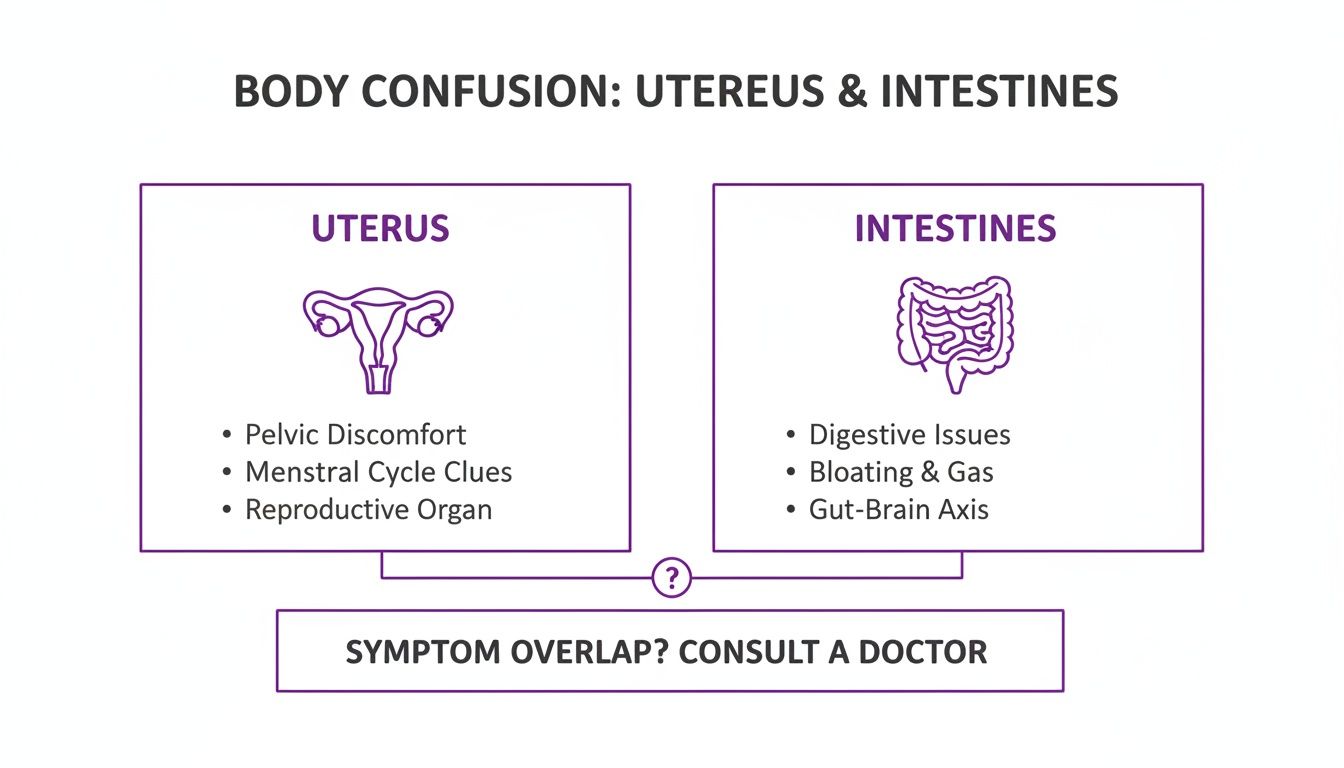
As you can see, both systems can cause abdominal cramping. But their underlying functions, and the patterns they create, are what really set them apart.
Timing: The Rhythm of Labor
The most reliable way to tell the difference is by keeping an eye on the clock. Gas pains are usually sporadic and unpredictable. You might get a sharp pang that vanishes, only to pop up again an hour later with no rhyme or reason.
True labor contractions, on the other hand, are all about rhythm. They tend to start out mild and far apart, but they will gradually get stronger, last longer, and come closer together. This predictable progression is the absolute hallmark of labor. Over a few hours, you'll start to see a clear pattern emerge. It's also helpful to learn about the other signs that labor is near.
Location: Where You Feel It
The location of the feeling offers another huge clue. Gas pain is often more localized. It might feel like a sharp stab in one specific spot, or you might feel it move around your belly as gas shifts through your digestive tract.
A contraction feels entirely different. It typically involves your whole uterus tightening up and becoming hard when you touch it. Many women describe it as an intense ache that starts in the lower back and wraps all the way around to the front of the abdomen. The sensation isn't just in one spot; it’s a full-belly experience.
True labor contractions have a distinct pattern. They often last 30-90 seconds and occur at regular intervals that get progressively shorter. During active labor, these contractions happen about every 3 to 5 minutes as the entire uterus tightens up, feeling firm like a basketball.
Triggers: What Makes It Stop or Start
Finally, pay attention to how your body responds when you move. Discomfort from gas can often be relieved with simple changes. Walking around, switching positions, having a big glass of water, or going to the bathroom can often help ease the pressure.
True labor contractions don't care what you do. They will keep coming, no matter what. Changing positions won't make them go away. In fact, walking or moving around can sometimes make them feel even stronger and more regular. This persistence is a clear sign that your body is working toward something much bigger than just digesting dinner.
Symptom Tracker: Is It Gas or Contractions?
Sometimes, writing things down is the best way to see a pattern clearly. Use this quick checklist to track what you're feeling. After an hour or two, you should have a much better idea of what's going on.
| Checklist Question | More Likely Gas | More Likely Contractions |
|---|---|---|
| Are they coming at regular intervals? | No, they're random and unpredictable. | Yes, they're starting to form a rhythm. |
| Are they getting closer together over time? | No, the timing is all over the place. | Yes, the time between them is shrinking. |
| Are they getting stronger? | No, the intensity is inconsistent. | Yes, they are gradually getting more intense. |
| Does the whole belly tighten? | No, it feels like a localized pang or bubble. | Yes, my entire uterus feels hard to the touch. |
| Does the feeling wrap from back to front? | No, it stays in one general area of my abdomen. | Yes, it often starts in my lower back. |
| Does changing position make it stop? | Yes, moving around or lying down helps. | No, nothing I do makes them go away. |
| Does walking make it better or worse? | Walking often helps relieve the pressure. | Walking can make them stronger and more frequent. |
Remember, this is just a guide. Everyone experiences labor a little differently. If you're ever unsure or your instincts are telling you something is up, the best course of action is always to call your doctor or midwife.
What About Braxton Hicks Contractions?
Just when you think you’ve figured out the difference between gas and true labor, your body decides to throw in a plot twist: Braxton Hicks contractions. The best way to think of these is as your uterus doing a dress rehearsal, flexing and toning its muscles for the big day.
These so-called “practice” contractions can be a huge source of confusion because they cause a very real tightening sensation across your belly. It feels distinctly different from the sharper, more localized pangs of gas. The key difference, however, is that unlike real labor, Braxton Hicks contractions are all over the place and don't follow any predictable rhythm.
Can Gas Cause Braxton Hicks?
Not directly. Gas does not trigger uterine contractions in the same way labor does, and it does not create the cervical change that defines true labor. But bloating, constipation, dehydration, and general abdominal discomfort can make Braxton Hicks more noticeable or happen at the same time, which is why many people ask whether gas can cause Braxton Hicks.
In the sources we compared, dehydration showed up again and again as a common reason practice contractions feel more active. If your intestines are also uncomfortable, the whole abdomen can feel tight, crampy, and confusing at once. That overlap can make it seem as if one caused the other when both are happening together.
Braxton Hicks vs. Gas vs. Early Labor
Here is the practical difference:
- Gas is often sharp, bubbly, shifting, or relieved after passing gas or having a bowel movement. The uterus does not usually harden as one firm muscle.
- Braxton Hicks usually feel like a temporary tightening or hardening of the uterus. They are irregular, often shorter, and may ease with water, rest, or a position change. They do not cause cervical change.
- Early labor tends to become rhythmic. The tightening comes in waves, lasts longer, gets harder to ignore, and is more likely to keep going even if you hydrate, lie down, or walk around.
The Bump also notes that labor involves the uterus tightening and relaxing in repeated waves, which helps explain why do contractions feel like gas pains for some people at first but then become easier to identify as the pattern builds (The Bump).
Try This, Then Reassess in 30 to 60 Minutes
Instead of guessing, run a short at-home check:
- Drink water and empty your bladder.
- Change position: lie on your side if you have been active, or take a short walk if you have been sitting.
- Place a hand on your belly and notice whether the whole uterus hardens during the sensation.
- Time each episode for the next 30 to 60 minutes.
- Reassess: if the tightening fades or stays irregular, Braxton Hicks or gas is more likely; if it gets more regular, stronger, and less responsive to rest, call your provider.
You can get more information on how to best prepare for labor right here on our blog.
Practical Steps You Can Take Right Now
When you're trying to figure out if what you’re feeling is really labor or just gas, moving from theory to action can bring a huge sense of relief and control. The very first, most practical thing you can do is start tracking what you feel. You don’t need any fancy gear. A simple notebook or a contraction timer app on your phone will do the trick.
Just jot down the frequency, duration, and intensity of each cramp or tightening sensation. This simple act of gathering data is powerful. It helps you see if a real pattern is forming and gives you clear, objective information to share with your doctor or midwife when you call them.
Managing Gas Discomfort
While you're tracking everything, you can also take a few simple steps to relieve what might just be digestive upset. These self-care tips can help ease gas pressure and might even give you a clearer answer on whether you're dealing with labor or simple indigestion.
- Gentle Movement: A slow, easy walk around your home can really help move trapped gas along and reduce that bloated feeling.
- Stay Hydrated: Sipping on water throughout the day is a small thing that makes a big difference in keeping your digestive system running smoothly.
- Simple Stretches: Try gentle positions like child's pose or a few rounds of cat-cow. These can do wonders for relieving pressure in your abdomen.
- Avoid Trigger Foods: Pay attention to what you’re eating. If you notice things like beans, broccoli, or fizzy drinks are making you gassy, maybe try to limit them for now.
Tracking isn't just for diagnosing labor; it's for clear communication. Having a log of your symptoms means you can give your doctor or doula a factual play-by-play of what's been happening, which helps them give you the best possible advice.
To get ahead of general aches and pains that can be mistaken for early labor signs, looking into the benefits of seeing a chiropractor during pregnancy might be a great next step. It's also never a bad idea to be prepared, so learning more about natural pain management during labor can help you feel more confident no matter what comes next.
When to Call Your Doctor or Midwife
Knowing exactly when to make the call to your provider can feel like a huge decision, but it doesn’t have to be a stressful one. Even if you're still wondering whether what you feel is gas, there are some clear signs that it is time to check in.
A fantastic guideline to keep in your back pocket is the 5-1-1 rule. This is your cue to call when contractions are coming every 5 minutes, with each one lasting for about 1 full minute, and this pattern has been going for at least 1 hour straight. A pattern this consistent is a strong signal that you’re moving into active labor.
Four signs labor may be starting
- Regular contractions that intensify. They become more rhythmic, stronger, longer, or closer together instead of fading out.
- Your water breaks. This may be a gush or a steady trickle. ACOG advises contacting your provider when you think your membranes have ruptured, even if contractions are not yet strong (ACOG).
- Bloody show or bleeding that needs assessment. Pink-tinged mucus can be normal near labor; bright red bleeding deserves prompt medical advice.
- A clear shift in pelvic pressure or back pain pattern. New pressure low in the pelvis, back pain that comes in waves, or pain that wraps from back to front may mean labor is organizing.
Call earlier in these situations
Call sooner rather than later if this is your first pregnancy and you are not sure what you are feeling, if you had a previous fast labor, if you are GBS-positive and think labor may be starting, or if symptoms begin before 37 weeks. Reduced fetal movement also deserves prompt contact with your provider. Mayo Clinic and the NHS both emphasize that preterm contractions, leaking fluid, or decreased baby movement should not be watched casually at home.
Severe one-sided abdominal pain, fever, or constant pain between contractions are not typical gas symptoms and should be assessed promptly.
Your healthcare providers want you to call. In our editorial review, that was one of the clearest themes across clinical guidance: when the pattern is changing and you are unsure, it is better to ask than to sit at home worrying.
Remember, your gut instinct is a powerful tool. If something just feels off, that's more than enough reason to pick up the phone. A doula or midwife can also be an incredible resource in these moments, offering a calm, professional voice to help you figure out what’s happening.
Common Questions About Contractions and Gas
Does gas mean you're going into labor?
Not by itself. You can be more gassy before labor, and some people feel gassy during labor because hormones and pelvic pressure affect the bowels. But gas alone is too nonspecific to confirm labor. It matters more if it appears with regular contractions, water breaking, bloody show, or a clear pattern of pelvic pressure and back pain.
Can passing gas feel like a contraction?
It can feel similar for a moment. Gas can cause sharp, crampy, or wave-like pain, which is why many people ask whether contractions can feel like gas or whether passing gas can feel like a contraction. The difference is that gas usually stays irregular, may shift location, and often improves after passing gas, moving around, or using the bathroom. Labor becomes more organized and progressive.
How do I know if it’s gas or cramps?
Use a 30- to 60-minute test. Hydrate, change position, walk a little, and time the sensations. If the discomfort eases, moves around, or improves after passing gas, digestion is more likely. If your whole uterus hardens, the waves repeat at intervals, and they get stronger or closer together, cramps are more likely to be contractions.
What are four signs that labor may be starting?
Look for regular contractions that intensify, water breaking, bloody show or bleeding that needs assessment, and a clear change in pelvic pressure or back-to-front pain pattern. Those signs are more useful than isolated gas, bloating, or random cramping.